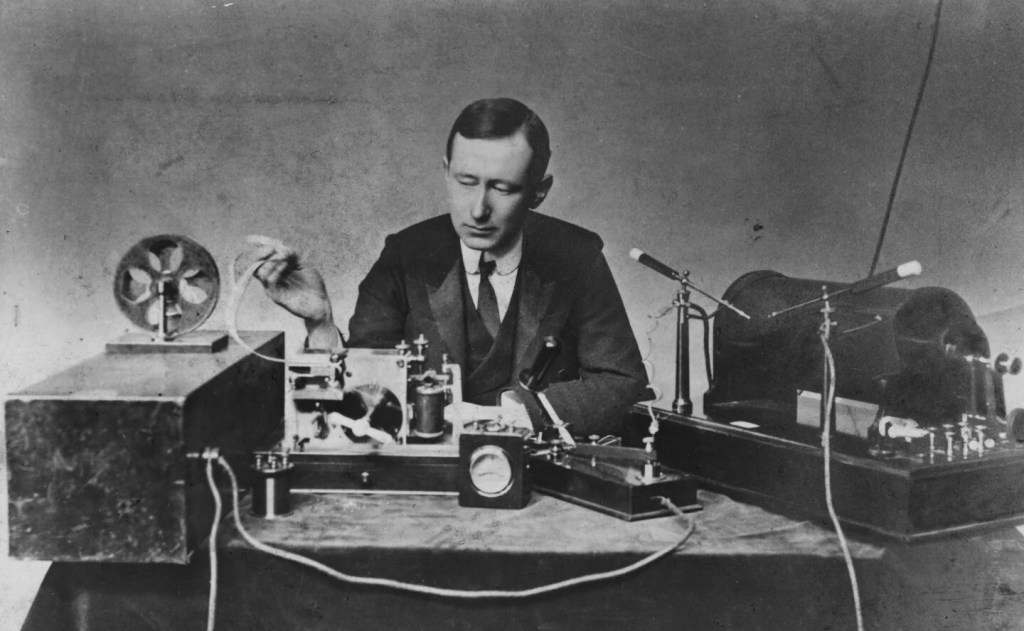
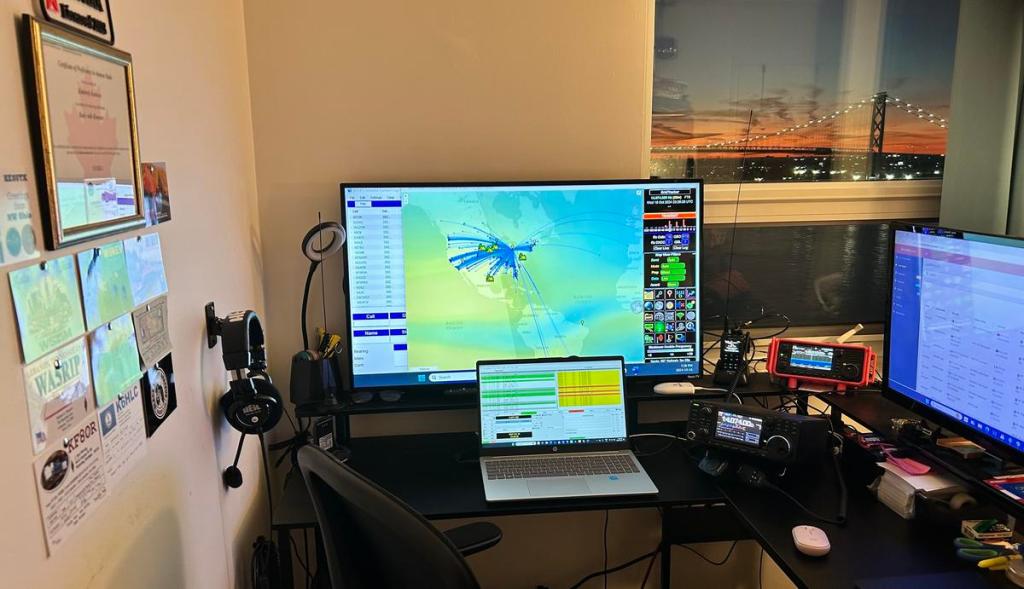
THEN AND NOW!
What is Ham Radio?
In 1901, Guglielmo Marconi received the first transatlantic wireless radio transmission from Signal Hill, Newfoundland. This monumental event formed the beginnings of an educational, fun, and rewarding hobby known as amateur radio.
In Canada, more 73,000 people are licensed to broadcast over the amateur radio airwaves. Amateur radio operators set up stations in their homes. Some set-ups are as low-key as a receiver in a bedroom with an antenna on the roof. Others are as elaborate as a room full of expensive technology and gadgets. Their radios don’t broadcast music or communicate with the masses. Their only function is to make one-on-one contact with other amateur radio operators. Today, many amateur radio operators have wholeheartedly embraced the technology that makes operating a radio easier. With radios connected to servers, you can operate them remotely from anywhere.
People are into amateur radio for many reasons. Some operators are trying to collect as many contacts as possible from far away locations, some operators are “rag-chewers” and like to have conversations with people they meet on the airwaves, and a large number are really into Field Day and other contests. Others use amateur radio as a means of emergency preparedness. In a world where so many of us rely on smartphones and WIFI, when disasters happen, from hurricanes to war to getting lost in remote areas, amateur radio is still the most reliable way to get communications up and running with people on the ground.
Because amateur radio communication does not rely on fibre optic cables or even systems of cell phone towers, radio amateurs are usually the most likely to be able to communicate when our modern commercial communications cannot. Essentially, radio communication works by sending sound over radio waves, electromagnetic waves that exist all around us. You need a transmitter, an antenna, and a power source, typically a rechargeable battery but can also be a solar panel charger, to broadcast your information over the radio waves, as well as a receiver to pick up the signal and translate it to the sounds you hear, which can be voice, morse code and other forms of data transmission such as the popular FT8.
Check out “100 Things to do in Ham Radio” courtesy of the Barrie Amateur Radio Club.
https://barriearc.com/builders-group/articles/download/100-things-to-do-in-ham-radio.pdf
The information provided here is basic. A simple Google search of amateur radio will provide you with a multitude of websites, publications, and informational resources intended to keep you informed on rules, licensing, education, or events. Just remember that licensing is different in each country of the world. Therefore, make sure to use course material that reflects the licensing requirements of your country. In Canada, please refer to Radio Amateurs of Canada at:
Enjoy this quick video from the RSGB (Radio Society of Great Britain).
https://rsgb.org/main/get-started-in-amateur-radio/amateur-radio-a-hobby-for-the-21st-century/
Meet you on the air!
’73
 bordercityradioclub.ca